
DOP 2: Delete One Part
SayGames LtdPuzzle
4.69.04K Reviews
- Version
- 1.3.39
- Installs
- 100.00M
- Age Rating
- Teen
Screenshots
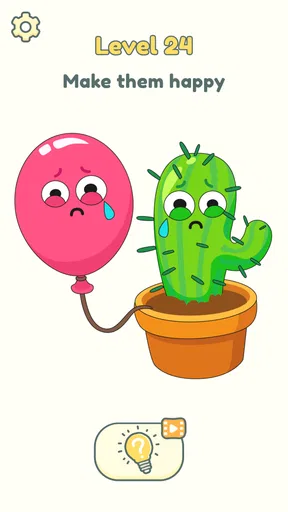
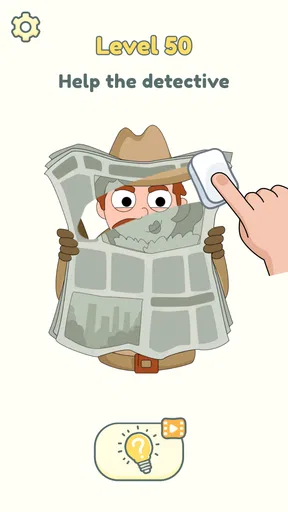
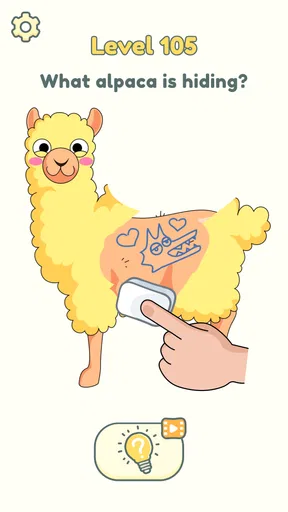
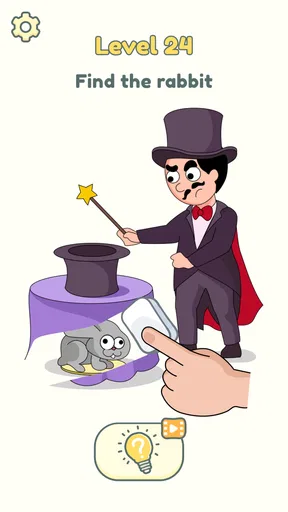
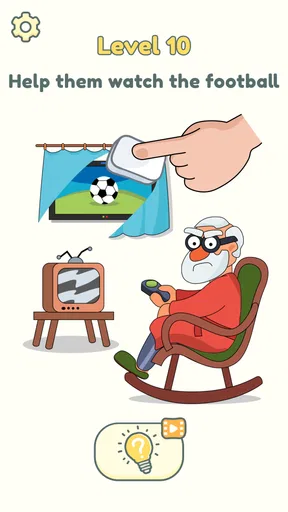
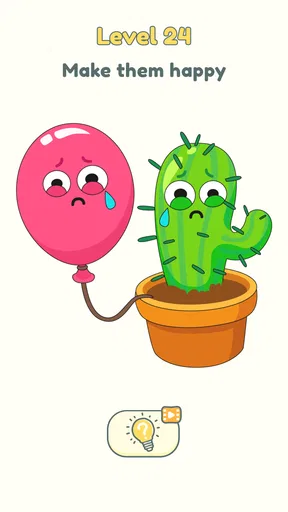
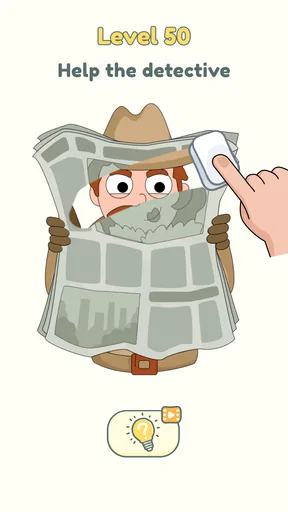
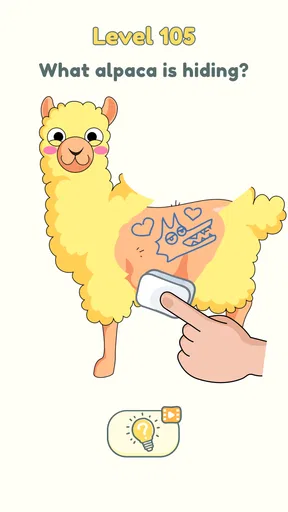
Our Review of DOP 2: Delete One Part
 Analysis by Appyee
I first reached for DOP 2: Delete One Part because its central idea is easy to grasp: look at a picture, decide what is out of place or hiding the answer, and erase it. That makes it a natural choice for a short break rather than a game that asks me to learn a long set of rules before I can enjoy it. Its playful puzzle format has a clear mood from the start, although its appeal depends on whether you enjoy interpreting drawings and testing a visual hunch.
A quick puzzle for small gaps in the day
The game works particularly well when I have a few spare minutes: waiting for a ride, taking a break between tasks, or sitting with someone who wants to try a level together. A puzzle usually gives us one focused question to discuss, so it can be a light shared activity without turning into a competitive game. I would not choose it when I want a long, story-led session; the pleasure here is in solving one illustrated problem at a time.
That short-session strength also sets expectations. If I open it intending to play just one puzzle, the next one can be tempting, but the basic loop remains familiar: inspect the scene, make a guess, and see what the missing part reveals. Players who need a changing set of controls or a detailed narrative to stay interested may find that repetition more noticeable than the quick, satisfying payoff.
What’s the Buzz About?
DOP 2: Delete One Part is a puzzle game from SayGames Ltd, built around a simple interaction: erase a section of an illustration to uncover what is happening or make the scene make sense. It is free to start, carries a Teen age rating, and offers in-app purchases priced at $1.99 per item. The game was released on December 10, 2020, and version 1.3.39 is listed for devices running Android 8.0 or later. Its 4.6 average comes from around 759,000 ratings, while about 9,000 written reviews and over 100 million installs point to a broad audience for this kind of quick visual puzzle.
How It Works
The gameplay is straightforward. You’re presented with a scenario and a drawing. Your task? Use your finger to erase part of the image to solve the problem. For instance, you might need to erase a cloud to reveal the sun or remove a wall to uncover a hidden door. The scenarios are sometimes hilarious and often clever, making you think outside the box. It’s the perfect blend of humor and intellect.
Reading the picture is the real puzzle
What makes the mechanic more interesting than ordinary tapping is that I have to make a visual judgment before acting. I look for an object that blocks something, an odd detail that changes the meaning of the scene, or a mismatch between what the picture shows and what the prompt implies. A useful habit is to scan the whole drawing before erasing. Starting with the most obvious object can be less effective than asking what single change would explain the scene.
If a guess fails, I treat it as information rather than a reason to swipe wildly. I check whether I misunderstood the situation, then try a more precise area. That keeps the puzzle-solving intentional and makes the eventual reveal feel earned. It also exposes a limitation of gesture-based picture puzzles: a correct idea can be awkward to express if I erase too broadly or miss the intended spot, so careful, small movements are often better than dragging across the screen.
Why You’ll Love It
One of the standout features of the game is its sheer simplicity. You don’t need to be a puzzle master to enjoy it. The controls are intuitive, and there’s no steep learning curve. This makes it accessible to everyone—whether you’re a casual gamer looking to kill some time or a puzzle enthusiast hunting for your next obsession.
But don’t let the simplicity fool you. The game offers a wide range of levels that increase in complexity. Each level presents a new challenge, and as you progress, you’ll encounter mind-bending puzzles that require a bit more thought. That’s where the real fun begins!
Who should keep it—and who may prefer something else
I would recommend it to people who like visual riddles, playful cartoon scenes, and solutions that come from noticing a detail rather than memorizing a rule. It can also suit a family game moment, provided the Teen content rating fits the people playing. The drawing makes it easy for someone nearby to suggest an answer, even if they are not holding the phone.
On the other hand, I would steer away from it if you want serious logic puzzles with several steps, a persistent world to explore, or a challenge built around numbers and deduction. Compared with a traditional crossword or a grid-based logic game, the answer here often depends more on interpreting a specific image. That makes it breezier, but also more subjective: if the visual clue does not click for you, the solution may feel like a surprise rather than a conclusion you could have derived from formal rules.
For a practical routine, I’d use it as a palate cleanser between more demanding games, not as a replacement for a puzzle collection with different mechanics. It is free to try, but the listed in-app purchases mean it is sensible to check purchase settings before handing a device to a child. If you are deciding whether it is worth keeping, a few short sessions are enough to tell whether the picture-based humor works for you; there is no need to commit to marathon play to understand the central appeal.
The Visuals and Soundtrack
Visually, the game is a treat. The artwork is vibrant and engaging, with a cartoonish style that adds to the overall charm. The animations are smooth, and the attention to detail is impressive. You’ll find yourself chuckling at some of the clever artwork and scenarios that the developers have put together.
How the presentation guides attention
The art is not merely decoration: it is the material I have to read. Bold, uncomplicated scenes make objects easy to identify, while the cartoon tone gives unexpected reveals room to be funny instead of unsettling. That clarity helps the game stay approachable, but it also means I should look for relationships between objects, not just tiny visual details. Often the scene’s meaning comes from what one element conceals or changes.
The setting is delivered through individual illustrations rather than a continuous place I move through. I find that works for a bite-sized game because each level can establish its own little situation quickly. The trade-off is that players looking for a connected story or a world that develops over time may want a different kind of puzzle adventure. Here, the image is the stage, the clue, and the punchline.
Sound, pace, and when to play
And let’s talk about the soundtrack for a second. It’s upbeat and perfectly complements the playful nature of the game. The sound effects are also spot-on, adding a touch of realism to your erasing escapades. Together, they create an immersive experience that keeps you hooked level after level.
The audio supports the light tone rather than turning each answer into a dramatic event. I like that fit: a small visual joke does not need a heavy soundtrack, and the brisk feel helps a session remain casual. If I’m playing somewhere quiet, though, I would be comfortable treating the illustrations and the interaction as the main event; the game’s basic pleasure is understanding the picture, not following a complicated audio cue.
For an everyday example, I might open it during a short wait when I want something more active than scrolling but less involved than starting a lengthy game. I can focus on a single scene, pause when the wait is over, and return when another gap appears. That makes it convenient, but it is still worth noticing how long I have been playing: the quick level-to-level rhythm can make a brief break stretch longer than planned.
Immersive and Addictive
One of the aspects I appreciate most about DOP 2: Delete One Part is its ability to keep you engaged without overwhelming you. The game is designed in a way that you can pick it up and play for a few minutes or lose track of time as you solve puzzle after puzzle. It’s addictive in a good way, and each completed level gives you that satisfying "aha!" moment.
Plus, the game doesn’t bombard you with ads. Sure, they’re there, but they’re not intrusive, which is a big win in my book. You can also play offline, making it a perfect companion for those long commutes or when you find yourself without Wi-Fi.
Where the simple loop can feel limiting
The same direct design that makes it easy to start is also its main constraint. Since the core action stays focused on erasing a part of a picture, it will not satisfy someone hoping for a deep toolset or a steady stream of new puzzle formats. The difficulty can come from spotting the intended interpretation, not from building a complex chain of deductions. I see that as a deliberate trade-off, but it is a real one if I am choosing a game for extended, demanding play.
It is also a good fit for playing without Wi-Fi, as the offline option makes it useful in places where a connection is unavailable. I would still avoid assuming that every aspect of a free game is entirely free: in-app purchases are available, and the game includes ads. For anyone sensitive to interruptions or managing purchases on a shared device, those are practical considerations rather than reasons to dismiss the game outright.
Final Thoughts
If you’re on the hunt for a game that’s both challenging and entertaining, DOP 2: Delete One Part might just be your new best friend. With its clever puzzles, charming visuals, and lighthearted gameplay, it’s a must-have app for anyone who loves a good brain teaser. So, what are you waiting for? Grab your virtual eraser and dive into the world of DOP 2. You’re in for a delightful and puzzling ride!
My recommendation is more specific: try it if you enjoy quick, image-led riddles and want a cheerful game that can fit around an ordinary day. Skip it if you need a connected story, rigorous logic, or substantially different mechanics from one session to the next. The strongest part is how the artwork and erasing action work together to create a small reveal; the main compromise is that this same formula can become familiar. For me, that makes it an easy occasional pick rather than a game I would expect to occupy every kind of puzzle mood.
Verdict
Strengths of DOP 2: Delete One Part
- Engaging puzzles keep users entertained.
- Unique gameplay mechanics with simple controls.
- Bright and colorful graphics enhance fun.
- Regular updates with new levels and content.
- No intrusive ads interrupt gameplay.
Limitations of DOP 2: Delete One Part
- Some puzzles can feel repetitive.
- Hints can be costly to obtain.
- Requires internet for certain features.
- May drain battery quickly on older devices.
- Occasional bugs cause minor disruptions.
Other Releases by SayGames Ltd
View All
Turbo Stars - Rival Racing
Racing4.6

Johnny Trigger: Action Shooter
Action4.6

DOP 4: Draw One Part
Puzzle4.4

DOP: Draw One Part
Puzzle4.4
Similar Picks in This Category
View All
Block Blast!
HungryStudio4.8

Braindom: Brain Games Test
Lahana Game Studio4.6

AMAZE!
CrazyLabs LTD4.6

Sudoku - Classic Sudoku Puzzle
Oakever Games4.7

Art Puzzle - Puzzle Games
Easybrain4.8

Amaze GO!
Oakever Games4.9
Frequently Asked Questions
What is the main objective of DOP 2: Delete One Part?
DOP 2: Delete One Part is a puzzle game where the main objective is to solve riddles by deleting parts of the image on your screen. Each level presents a unique scenario, and your task is to figure out what needs to be erased to reveal the solution. This gameplay encourages creative thinking and problem-solving skills.
Is DOP 2: Delete One Part free to play?
Yes, DOP 2: Delete One Part is free to download and play on both Android and iOS devices. However, it does contain in-app purchases and ads. Players can choose to buy hints or remove ads for a smoother gaming experience, but these purchases are optional and not necessary to progress through the game.
How challenging are the puzzles in DOP 2: Delete One Part?
The puzzles in DOP 2: Delete One Part vary in difficulty, offering a mix of easy and more complex challenges. Early levels are designed to be simple to help players understand the mechanics, but as you progress, the puzzles require more thought and creativity to solve. This balance keeps the game engaging for a wide range of players.
Can DOP 2: Delete One Part be played offline?
Yes, DOP 2: Delete One Part can be played offline, which makes it convenient for users who want to enjoy the game without an internet connection. However, accessing certain features like in-app purchases and updates will require an internet connection. Playing offline also means ads won't be displayed.
What age group is DOP 2: Delete One Part suitable for?
DOP 2: Delete One Part is suitable for players aged 12 and above. The game features simple controls and non-violent content, making it appropriate for younger audiences. However, some puzzles may require abstract thinking, which might be challenging for very young children. Parental guidance is recommended for younger players.
Play our best games!


